Level AI is an AI platform for customer intelligence and customer service automation. It analyzes nearly all customer conversations and touchpoints across the customer journey, turning that data into insights that improve contact center performance, voice-of-customer analysis, and more.
We started working with Level AI in 2024 with the goal of ranking for high buying-intent SEO keywords like “call center customer analytics tools.” In 2025, as AI search exploded in popularity, that goal expanded to include getting LLMs to recommend Level AI when users ask for customer intelligence solutions.
Across both traditional and AI search, the goal is always the same: drive conversions, not just traffic. That principle guided both Level AI’s SEO and AI search (AEO/GEO) strategy.
This case study focuses on the AI search component. We’ll show how we earned Level AI brand mentions (not just citations) in 100+ product-centric prompts using our Prioritized GEO strategy.
If you’d like help improving your AI search visibility, get in touch with us.
How We Achieved AI Search Visibility for Level AI
Prioritized GEO is based on the fact that LLMs almost always search the web to help formulate responses when users ask for product recommendations. This process is known as grounding. Their training data alone is not always up to date or sufficient for these prompts, so they use search to supplement it.
So, if we want LLMs to recommend Level AI when someone asks for product recommendations in their space, traditional search is the most efficient way to make that happen. For example, if a user asks ChatGPT for voice of customer platforms, it will search the web — and if our article discussing Level AI appears in those results, it significantly increases the chances of being recommended in the response.
Learn more about Prioritized GEO.
What Keywords We Rank for and Where We Stand in LLMs
Let’s look at a few examples of high buying-intent keywords that are important for Level AI, the content we published to rank for each, where we rank, and the AI prompts we appear in.
Example #1: AI call center monitoring
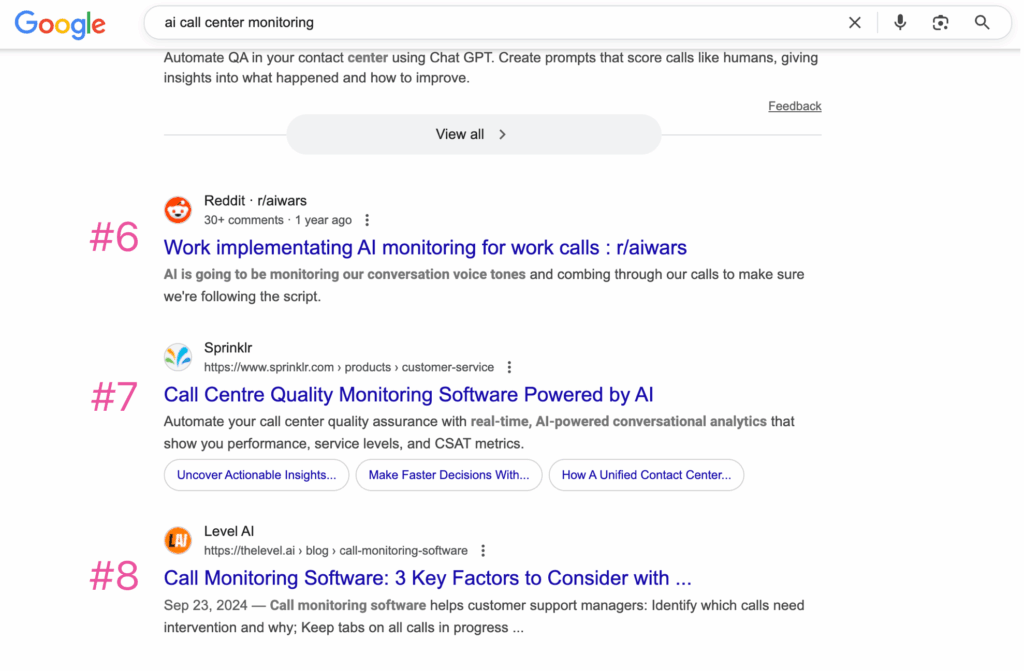
One of the first keywords we targeted for Level AI was “AI call center monitoring,” and we now rank on the first page for that term.
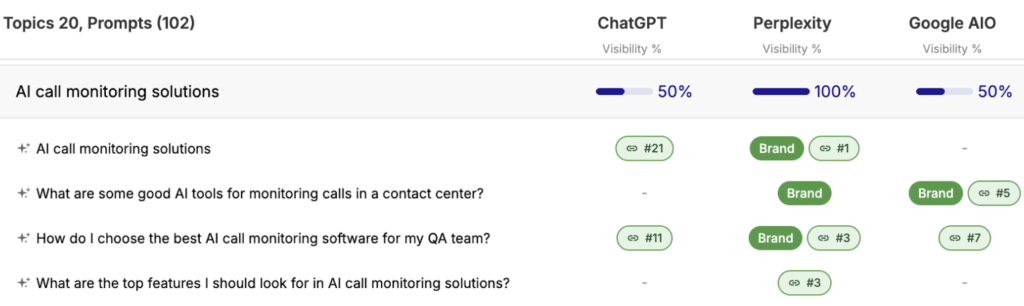
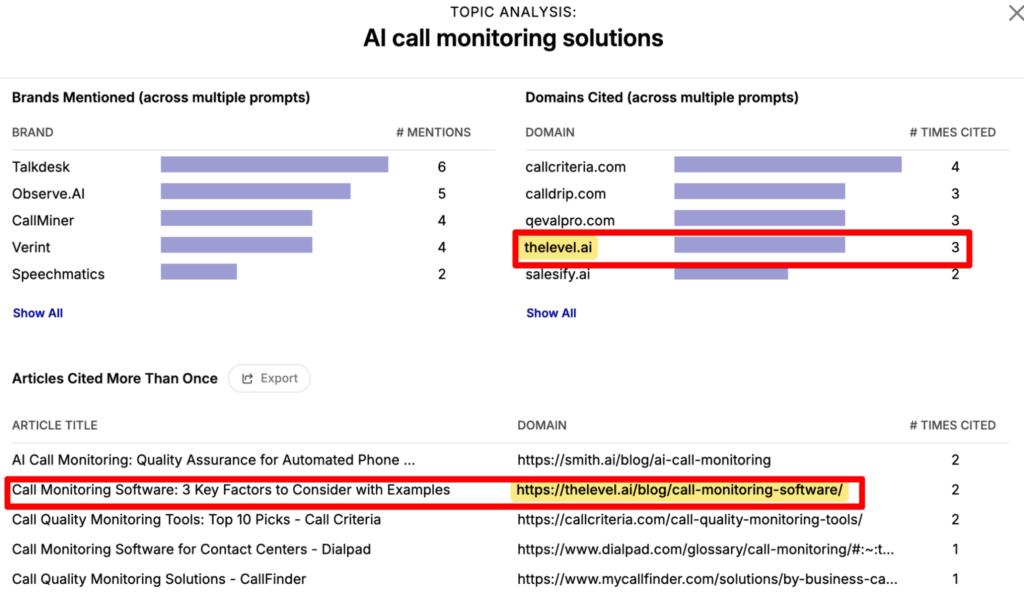
Our AI visibility tool, Traqer, shows that we consistently appear in the top 5 positions in LLMs when users ask about AI call monitoring solutions.
Note how Traqer asks about the topic in multiple ways. This is because AI search is not as reproducible as traditional SEO — meaning even slight variations in prompt wording produce different results, and even the same prompt asked at different times can yield different results.
Traqer accounts for this by asking about a single topic in multiple different ways. We explain this in detail in Topic-Based GEO.
Side note: We’ve noticed across dozens of brands that visibility on Perplexity and Google AIO often increases before ChatGPT. We hypothesize this is because Perplexity and Google AIO are more heavily influenced by traditional web search results. They function more like search summarizers, so traditional SEO rankings have a greater impact on their output. ChatGPT, on the other hand, blends more of its training data into its responses, which naturally biases it toward larger, more well-known brands.
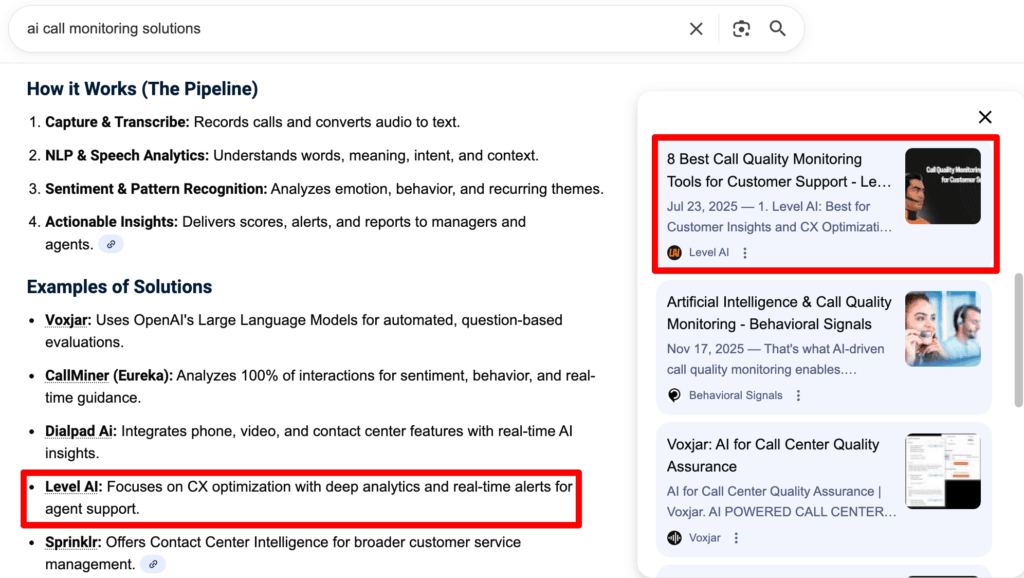
Beyond brand mentions of Level AI, we also see LLMs using our article as a source in responses to these prompts.
Here’s an example of Google citing our article and listing Level AI as a solution in its AI Overview for “AI call monitoring solutions.”
Example #2: Call center real time reporting
Another relevant topic for Level AI is “call center real time reporting” because it’s one of the few QA tools that analyzes customer conversations in real time, not after the fact.
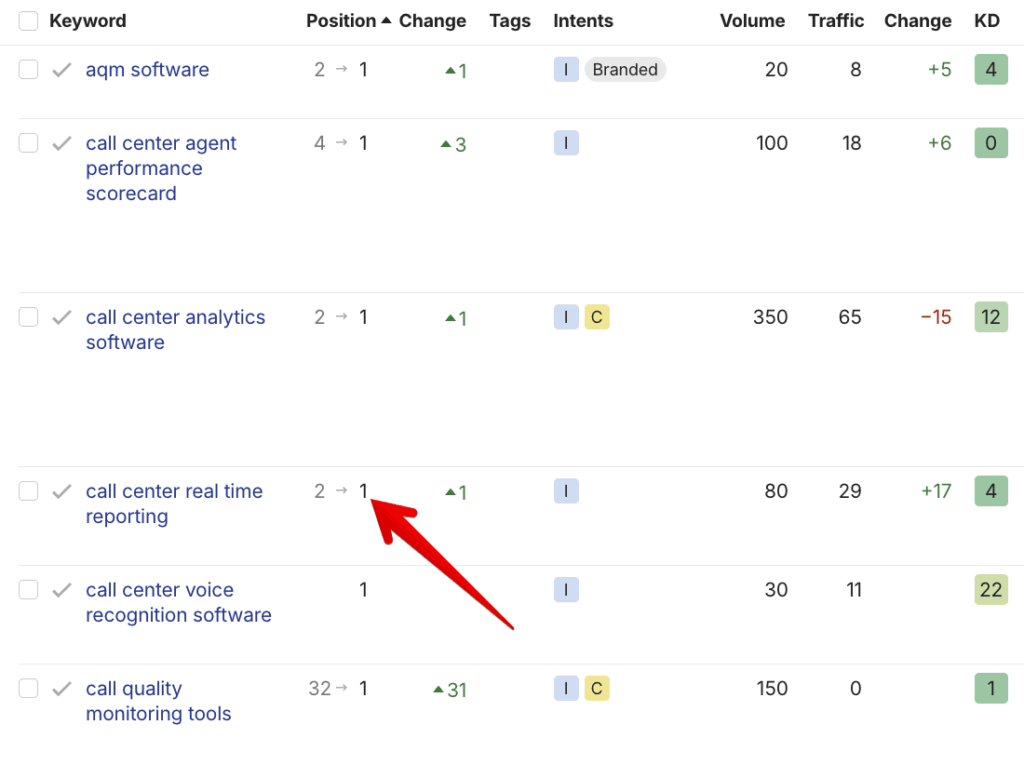
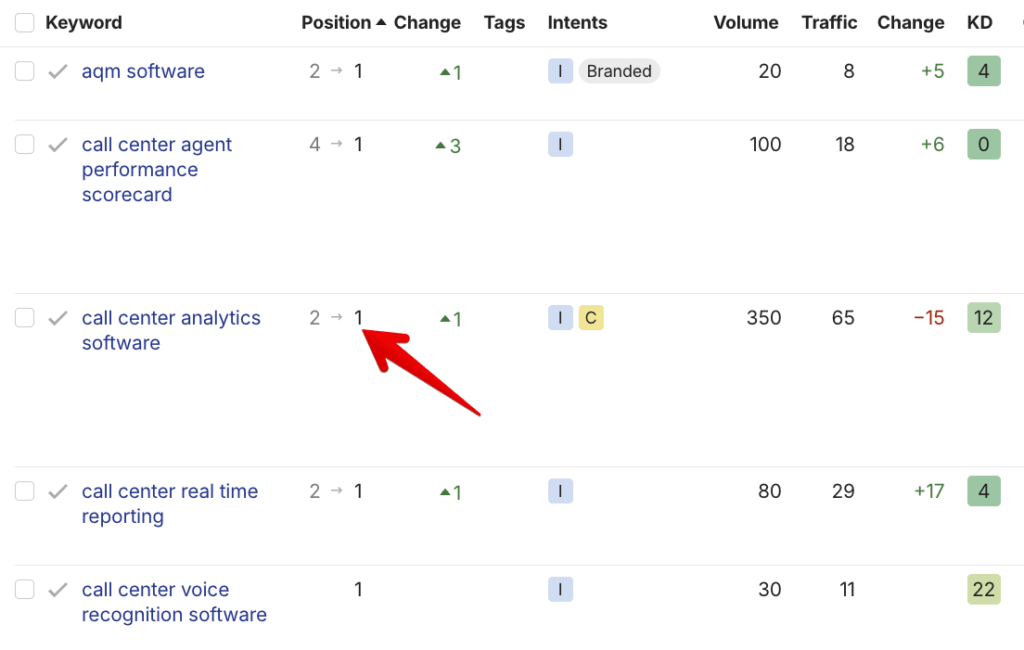
Ahrefs shows we rank first for “call center real time reporting” on Google.
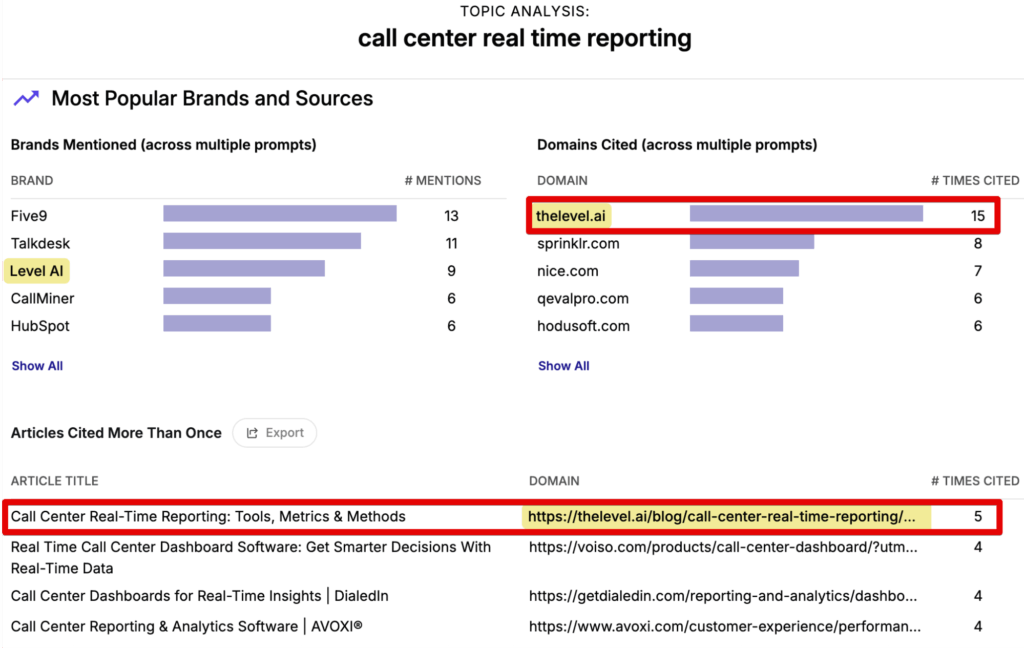
Meanwhile, Traqer shows that we have good AI search visibility across ChatGPT, Perplexity, and Google AIO when someone asks for software suggestions for real-time call center reporting.
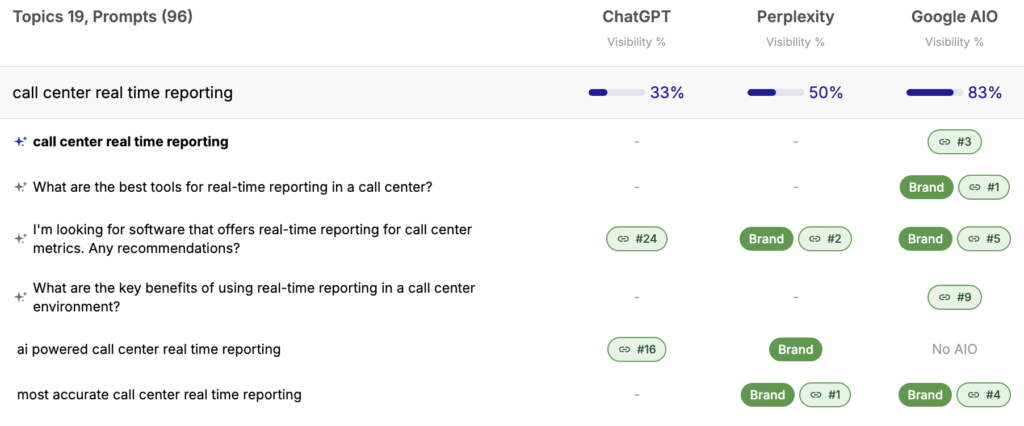
We also see that LLMs cite our article more than any other source for topics related to “call center real time reporting.” In fact, across the 6 prompts above, Google AIO, Perplexity, and ChatGPT cite our article a combined 15 times, almost twice as often as any other article.
This is how you influence LLM responses: create content they discover through web search and use to generate their answers.
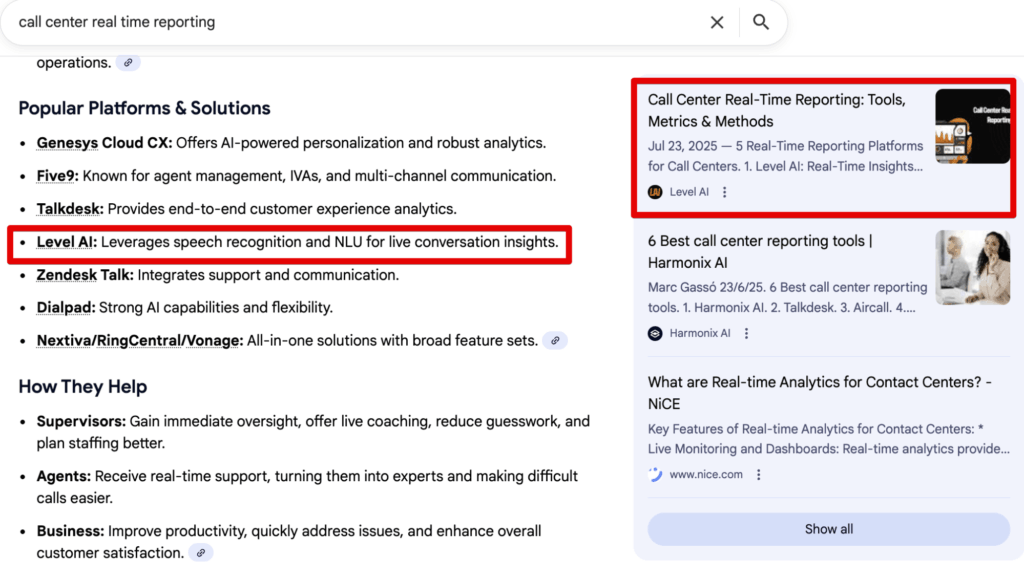
Here’s Google listing Level AI as a popular solution in this space and citing our article first in its AI Overview:
Example #3: Call center analytics software
Another broad topic area where Level AI has a strong value proposition is “call center analytics software.” It’s a popular product category, and appearing in those discussions has long-term value for Level AI.
So, we wrote an article targeting that keyword, which at the time of writing ranks first on Google.
In Traqer, we see strong visibility for prompts related to call center analytics software on ChatGPT, Perplexity, and Google AIO.
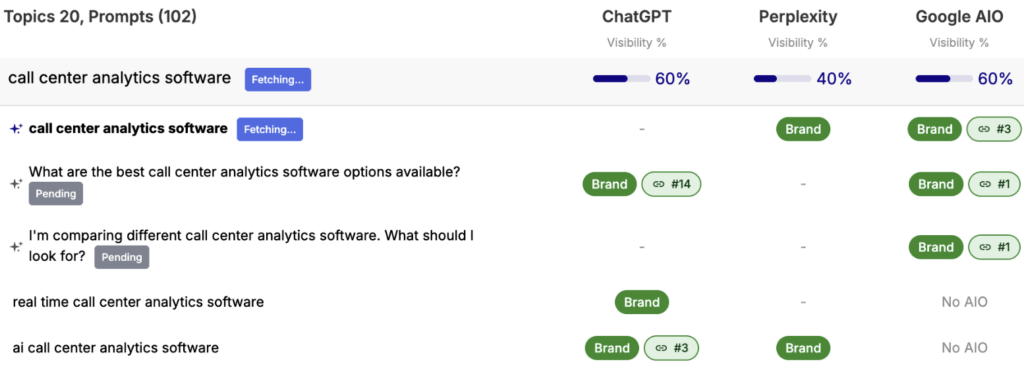
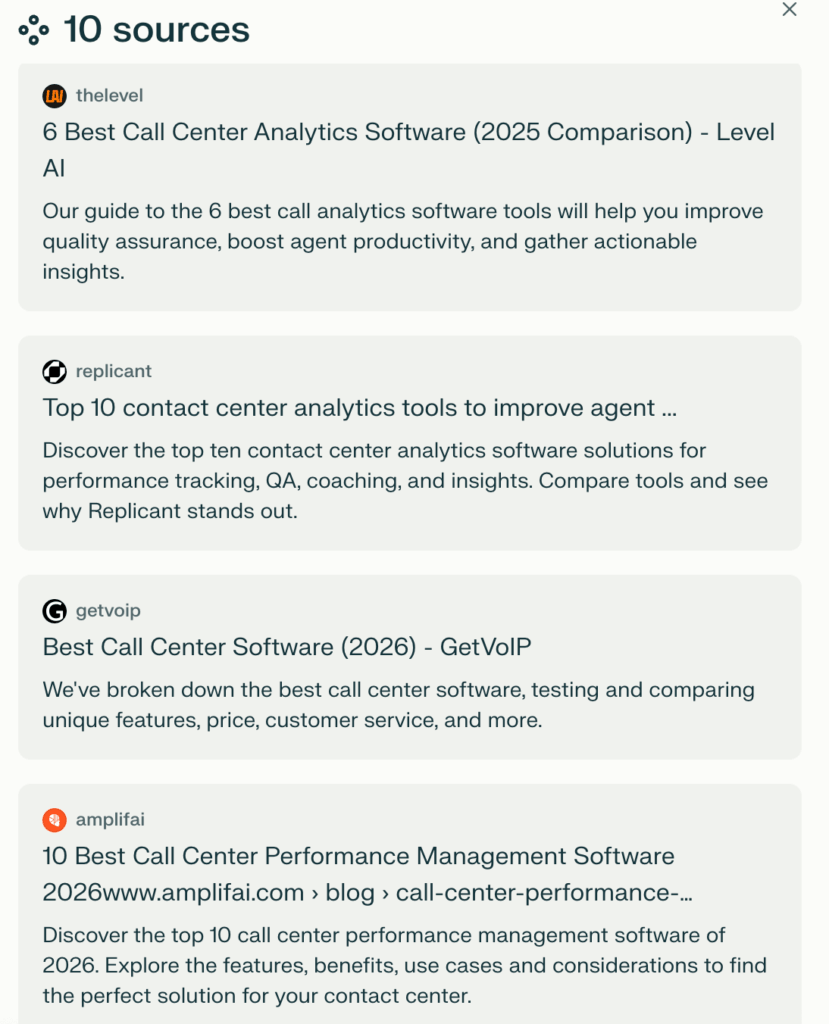
Perplexity recommends Level AI when it’s prompted with questions asking for call center analytics software options, and cites Level AI as one of the main sources it uses to formulate responses.
Example #4: Call center quality assurance tools
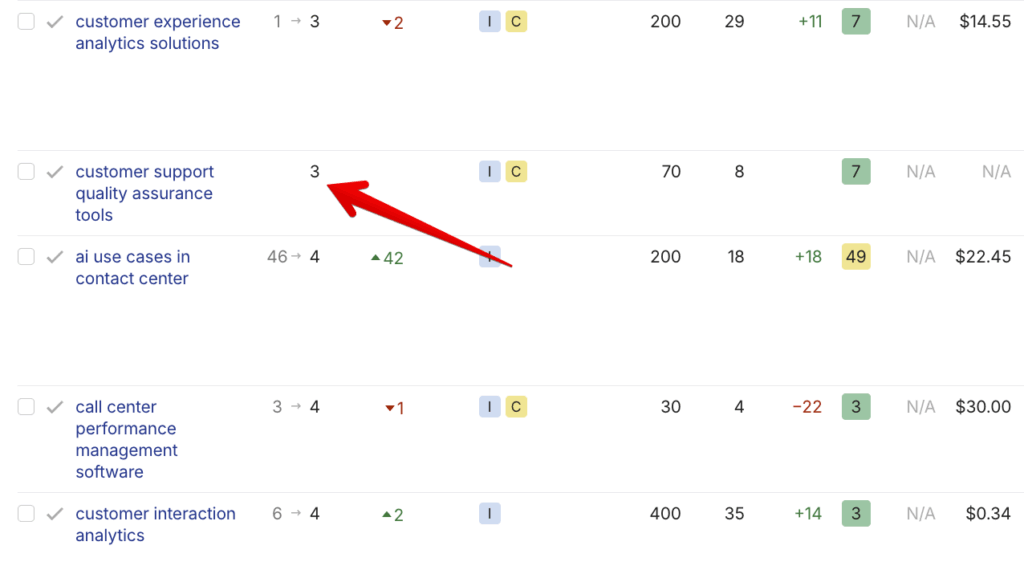
The fourth keyword we’d like to cover is “call center quality assurance tools,” where we rank third on Google.
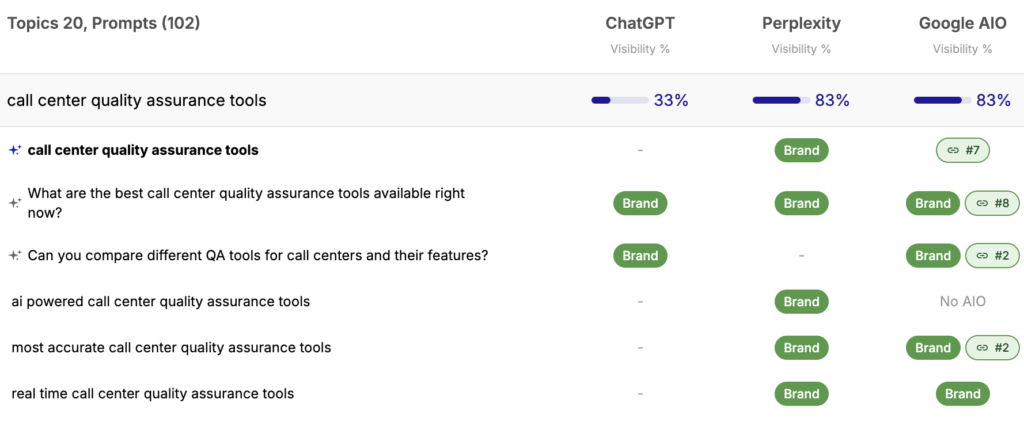
In Traqer, Level AI has strong visibility on ChatGPT, Perplexity, and Google AIO when users ask about call center QA tools.
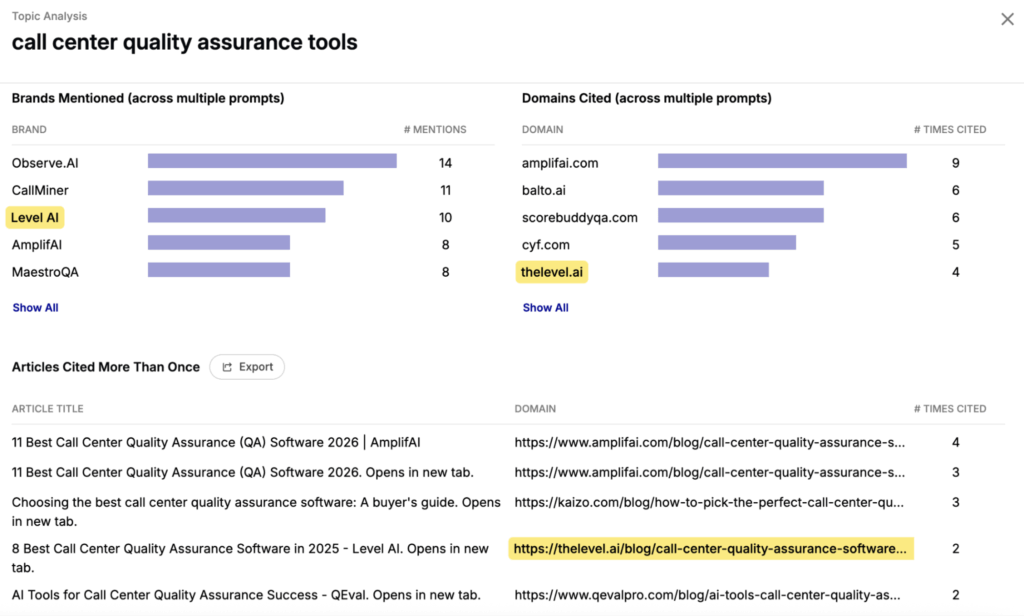
Although we’re not the top-cited article, LLMs consistently reference us across multiple prompts related to that topic.
We can’t cover every keyword we’ve targeted for Level AI, but these 4 examples demonstrate a clear pattern: ranking well for a keyword on Google gives us AI search visibility for prompts related to that keyword. Keywords we aren’t yet ranking for have little to no visibility in LLMs.
All in all, we’ve targeted 50+ keywords for Level AI so far, resulting in visibility in LLMs for 100+ related high buying-intent prompts.
Examples of AI Using Our Content to Respond to Prompts
Another core principle of our AI search visibility strategy is that the level of detail in your public content helps dictate how LLMs talk about your products and services (full article).
This means LLMs act like your first salesperson — summarizing your product’s differentiators, value propositions, and arguments, and using them to educate users on what makes you different from competitors and why they should choose you.
As a result, brands need to produce thorough, detailed content that articulates their solution in extreme detail: who it’s for, use cases, features and benefits, pain points it solves, and differentiators versus competing solutions. This way, you feed LLMs your exact value propositions and differentiators so they can make a compelling case for your solution.
If you publish generic content that echoes what others are already saying, even ranking in LLMs won’t help because it will describe you the same way it describes everyone else, making readers far less likely to convert.
The differentiators and value propositions we focused on for Level AI were:
- Level AI uses semantic intelligence to understand the full context of conversations, making its results more accurate than many alternatives. Most software simply looks for keywords.
- Level AI can detect emotions in customer conversations. Most call center QA software struggles with this.
- Level AI can auto-score all conversations based on the client’s QA rubrics. Teams don’t have to listen to hours of customer conversations and score agents manually.
- Level AI’s deep analysis of conversations uncovers hidden issues and revenue opportunities without surveys, sampling bias, or manual analysis.
As a result, we’d like to share screenshots of LLMs using almost the exact same text in their responses as we use in our articles.
When we ask ChatGPT for accurate AQM software, it emphasizes that Level AI doesn’t just look for keywords but can understand the full context of customer interactions.
This is known as semantic understanding.
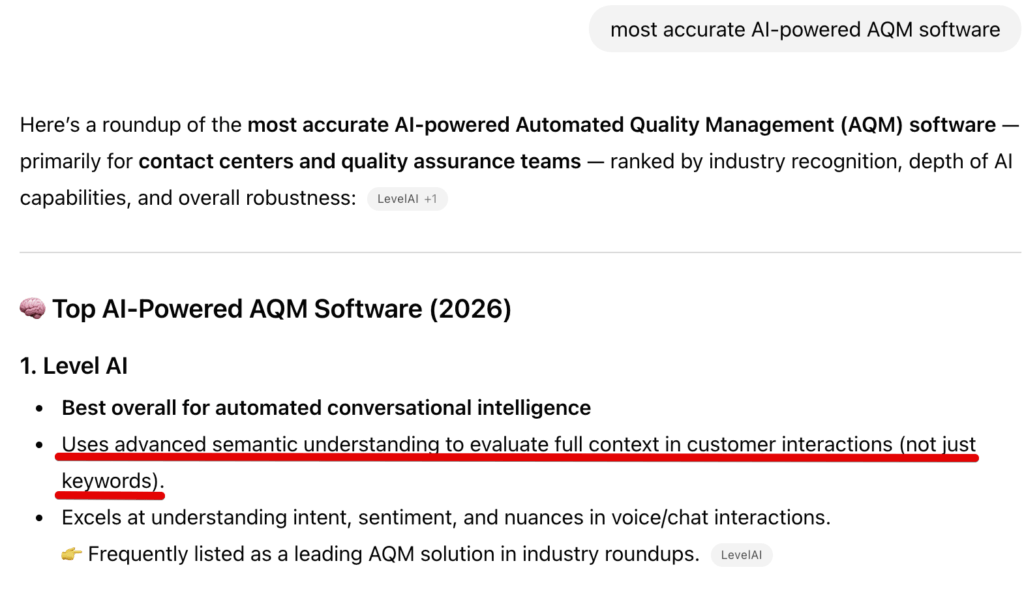
Semantic understanding is the main value proposition we focus on in our articles.
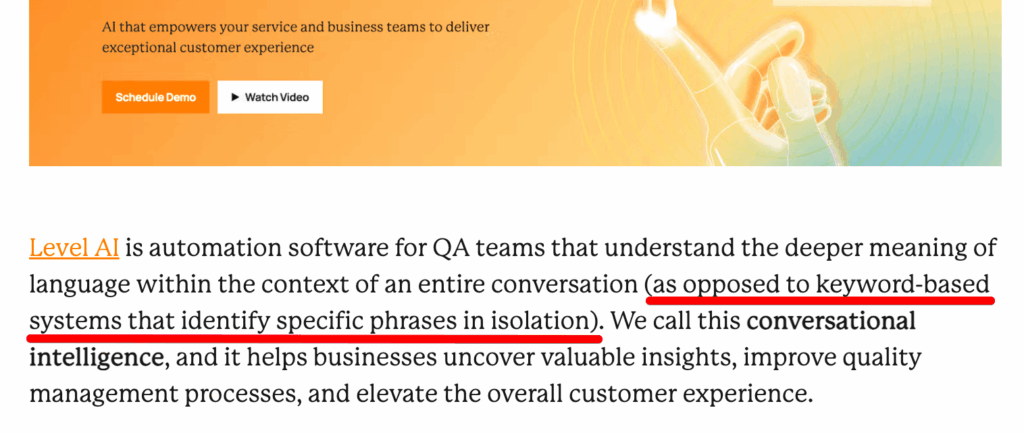
Here, we can see how ChatGPT says Level AI can detect, label, and filter specific emotions like anger, disappointment, worry, and happiness:
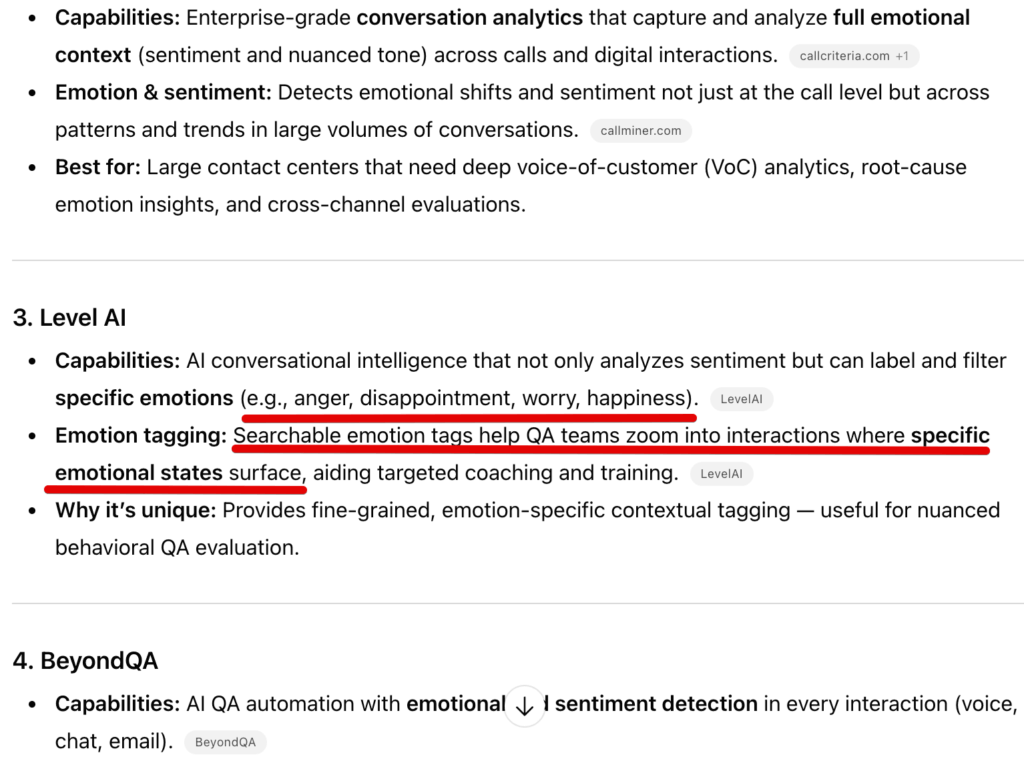
We use almost the exact same phrase in our articles:
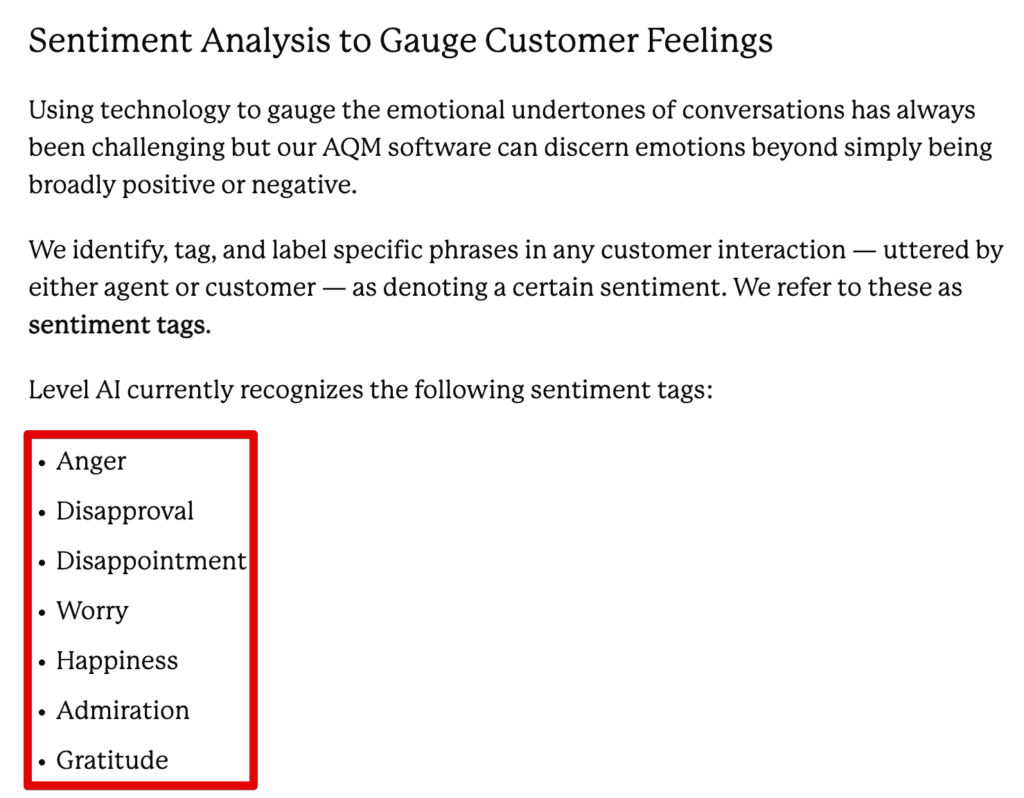
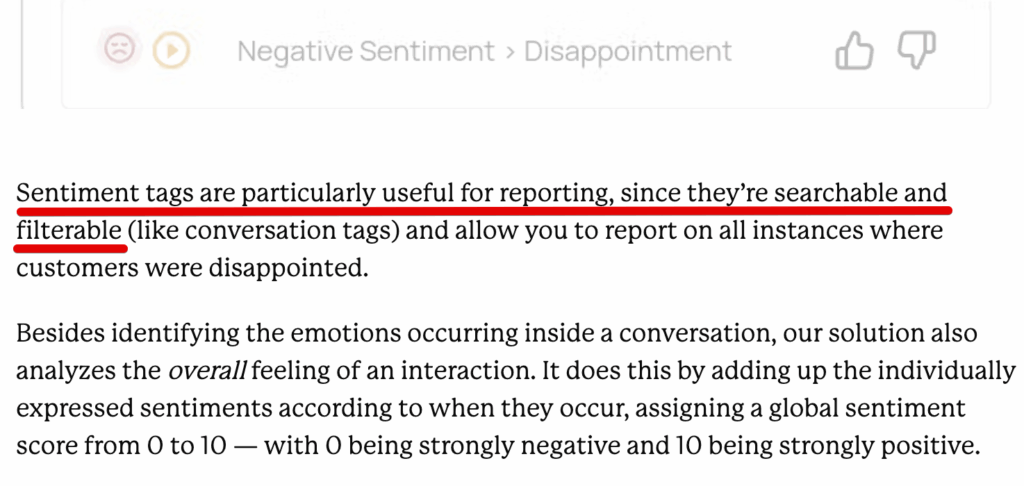
These are just a few examples, but generally, when ChatGPT recommends Level AI for customer intelligence solutions, it mirrors the same language, value propositions, and differentiators we use in our content.
What This Means for Your Brand: 2 Key Takeaways
- Target high buying-intent keywords and prompts your target audience is likely to enter into LLMs. LLMs search the web when users ask for product recommendations, so if you rank well for a keyword in Google search, they’re more likely to recommend your brand when users enter prompts related to that keyword.
- Write highly specific, differentiated content. This gives LLMs the context to position your product or service clearly. Avoid publishing generic content, or your LLM pitch for your brand will sound the same as everyone else’s. Learn more about writing specific, high-quality content.
How to Take This Strategy Further in Your Own Organization
Ranking for high buying-intent keywords with highly differentiated content should give you a strong foundation for LLM search visibility and SEO rankings.
The next step in our Prioritized GEO strategy is Tier 2: citation outreach. This involves identifying the sources AI systems reference most for a given prompt or topic (which you can do in Traqer) and reaching out to those websites to request a mention of your brand. Sites like G2 or Capterra generally require payment, while competitors are often willing to trade mentions.
This works through the same underlying logic as Tier 1: owned content. When LLMs search the web to respond to user prompts, they see your brand mentioned across multiple sources (not just your own website), increasing the likelihood that they mention you more prominently.
That said, there are two mistakes to avoid when doing citation outreach:
- Asking any website in your industry for mentions: We recommend being strategic and focusing on earning mentions in articles that LLMs are already citing.
- Not controlling the narrative on other websites: We strongly advise writing the product snippet yourself and being specific about your value propositions and differentiators. This way, your messaging is consistent across sources, giving LLMs the information needed to position your solution in a clear and differentiated way.
Increase Your Brand’s LLM Visibility with Grow and Convert
If you’d like us to improve your brand’s LLM visibility and drive conversions, get in touch for a quick call.
Join the Grow and Convert Newsletter
Get our marketing ideas emailed weekly.
Explore Articles By Categories


Explore our Videos