One of the more common situations we see with B2B companies is this: a head of sales or founder is doing all the selling and generating leads through outbound. They’re building the outbound motion, taking calls, following up, and closing deals themselves. They know they need inbound leads, but they don’t have a marketing team to build that channel.
That’s exactly where Toro TMS was when they came to us.
Toro TMS makes trucking management software (“TMS”) for bulk haulers — think dump trucks, fuel tankers, and construction materials. It’s a subset of the trucking industry that most TMS platforms ignore because the larger software players are built for general freight. Toro saw that gap and built their product specifically for bulk haulers.
When we met their head of sales, he was building the outbound motion, hiring reps, and running the sales process himself. He knew inbound leads would be critical for long-term growth, but he didn’t have the time or expertise to build an inbound SEO and content marketing engine. So he hired us to build that side of the business while he focused on what he did best: sales.
When we started in early 2025, roughly 5% of Toro’s revenue came from branded inbound. Eighteen months later, that number is over 25%.
Here’s how we did it.
The Starting Point: Branded Keywords Only
When we kicked off in January 2025, here’s what Toro ranked for:
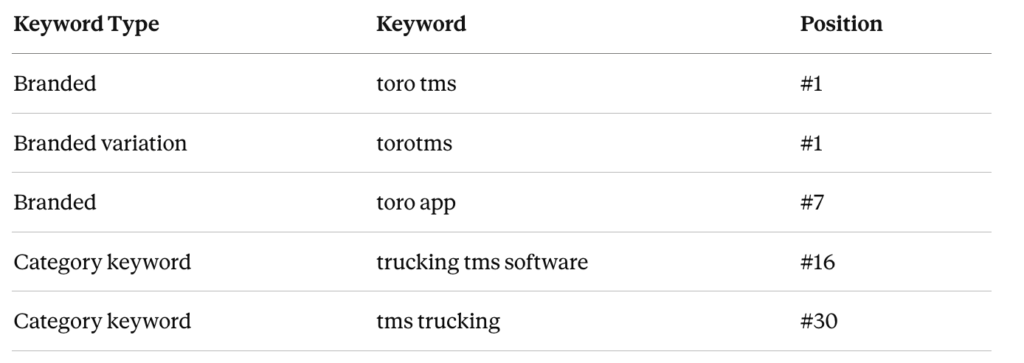
That’s it. Every keyword driving real traffic was someone who already knew Toro’s name. The handful of non-branded keywords they showed up for were all on page 2 or beyond, driving essentially zero traffic.
This is what most B2B companies look like before investing in content: you rank for your own name and nothing else. People who already know you can find you. Everyone else can’t.
What We Rank for Today (18 months later)
Here’s a sample of what they rank for today:
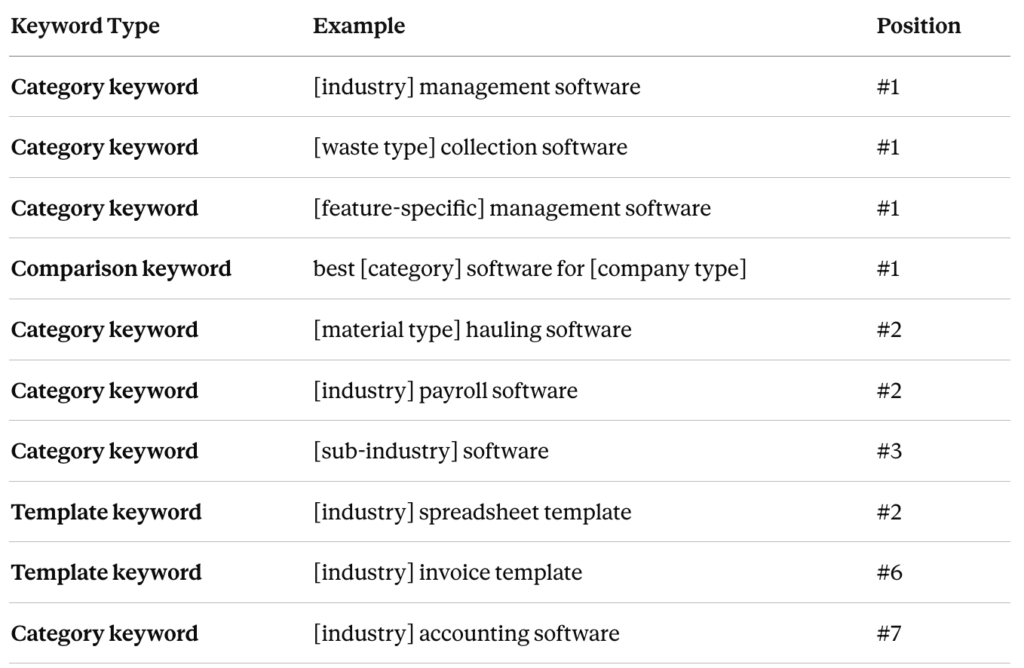
This is just a sample. In total, Toro went from 0 first-page rankings for non-branded keywords to 43 today. Out of the 46 articles we’ve published, 43 of the keywords we’ve targeted now rank on page 1.
That’s a 93% first-page ranking rate in 18 months. The remaining 3 pieces not on page 1 are mostly newer publications that should reach page 1 in due time.
The Strategy: Pain Point SEO Across Every Keyword Type
Our approach with Toro was the same strategy we use with every client: Pain Point SEO. We identify the keywords that people search when they’re actively looking to buy, and we write content targeting those keywords.
The keywords we’ve targeted for them fall into three types:
Category keywords are the core of the strategy. In short, they’re keywords that indicate someone is shopping for products in your category (read more about Category Keywords). These range from the broadest version of what the product is (the head term, now ranking #1) down to specific features the product offers: payroll, dispatch, load management, ticket management. Each one maps to a real capability of the product. We also layer in specificity where Toro has a niche advantage. Most competitors are fighting over generic software keywords. Toro ranks for keywords specific to their sub-industry because they have content that goes deep on those use cases. Their competitors don’t.
Comparison keywords capture people actively comparing options. These include keywords like “toro tms vs. [competitor]” or “[competitor] alternatives.”
Template keywords are a type of jobs-to-be-done keyword and catch people one step before the software search. Someone downloading a dispatch spreadsheet template is managing their operations manually. They’re likely outgrowing spreadsheets and will eventually need software.
For Toro, that meant mapping out every way a trucking company owner or fleet manager might search for software. Not just the obvious head terms, but every variation: category keywords for every feature the product offers (payroll, dispatch, accounting, compliance), comparison keywords (best X, X for small companies), and even template keywords that catch people one step before the software search.
These keywords aren’t massive in volume. The biggest gets about 1,500 searches per month. Many get 100 to 200. But most people searching those terms are potential buyers. That’s the whole point of Pain Point SEO. You don’t need 50,000 visitors. You need 500 of the right ones.
How We Wrote the Articles for Toro TMS
We’ve published 46 bottom of funnel, product-centric articles over the course of the engagement. As we’ve written about before, writing quality is equally as important as keyword and content strategy. Even if you target the right keywords, if the writing is low quality (whether from humans or AI), it will massively hurt your chances to both (a) rank and (b) impress your prospects well enough to convert.
So for Toro, every article we wrote relied on a few foundational principles that we’ve relied on for 8+ years:
(1) We didn’t write generic product comparisons like a third party would. We wrote from Toro’s perspective as a company that deeply understands bulk hauling. The category keyword article doesn’t pretend to be an objective third-party review. It opens by discussing what matters in trucking management, steers toward the specific needs of bulk haulers, and then explains how Toro built their product to address those needs.
This is the approach we laid out in our self-promotional listicles article: you don’t need to pretend you’re unbiased. You don’t need to rank yourself #1 on a fake list. You just need to be honest about what your product does and who it’s for, and go deep enough that the content is genuinely useful to the reader.
(2) We interviewed Toro’s team to get the details. Every article is built on interviews with the people at Toro who know the product and the customer. That’s how we write about things like compliance reporting, ticket management, or the specific challenges of hauling construction and demolition waste. You can’t get that level of detail from Google research or AI generation. It has to come from people who actually know the industry and have a strong opinion on how and why their product or service approaches the problem the way it does. People want these unique perspectives. They live inside key employees’ heads in your organization. You need a process to extract those perspectives and get them into your content.
(3) We wrote at the depth of a sales conversation. When a bulk hauler is evaluating TMS options, they want to know how it solves their problems in extreme detail. For example, for Toro they want to know exactly how the software handles dispatch, invoicing, driver management, and compliance. They don’t want a 300-word overview or a basic table with checkmarks, they can ask ChatGPT for that. Your content needs to go deeper. So our articles did. They go deep on features, workflows, and specific use cases because that’s what converts readers into demo requests.
The Results: Rankings
We covered the keyword types above. Here’s the distribution of where those keywords rank:
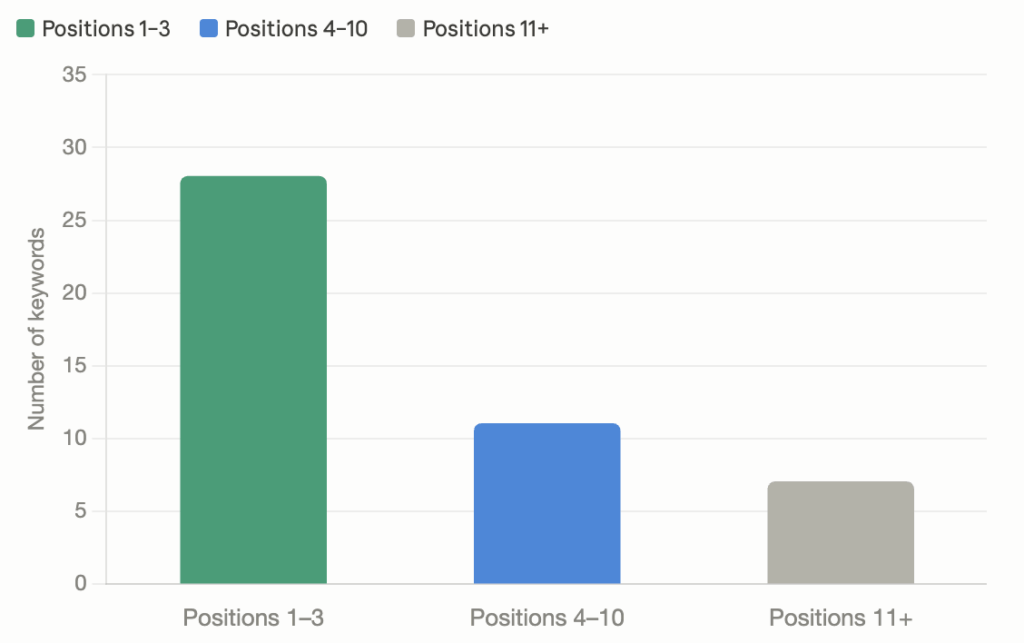
30 keywords in positions 1 through 3; 13 more in positions 4 through 10. That’s 43 out of 46 keywords on page 1, an 93% hit rate.
The Results: Demos Booked
This is the number that actually matters.
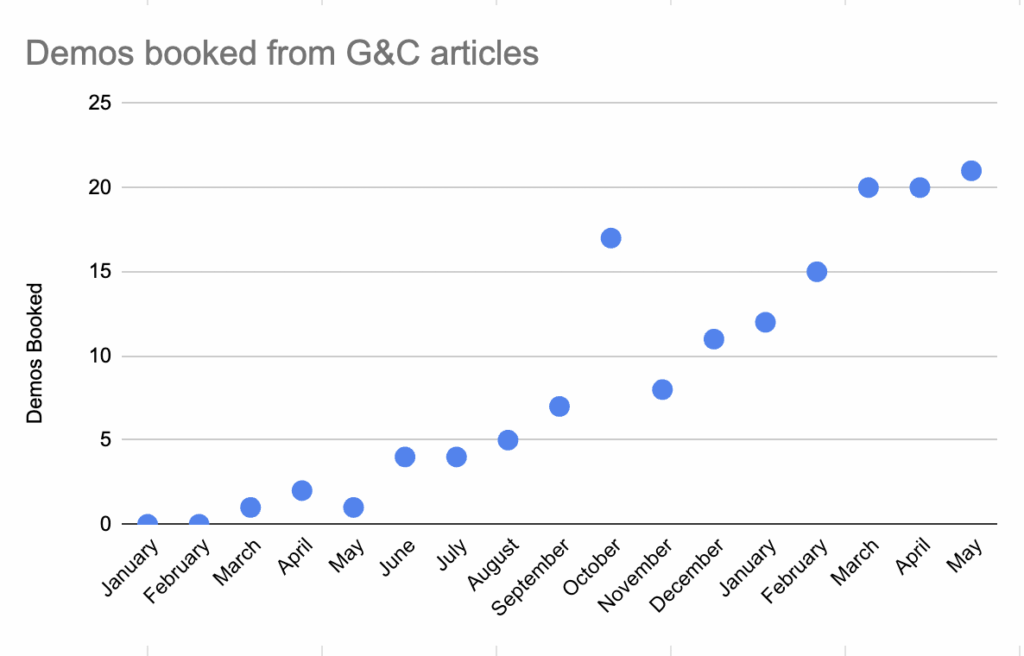
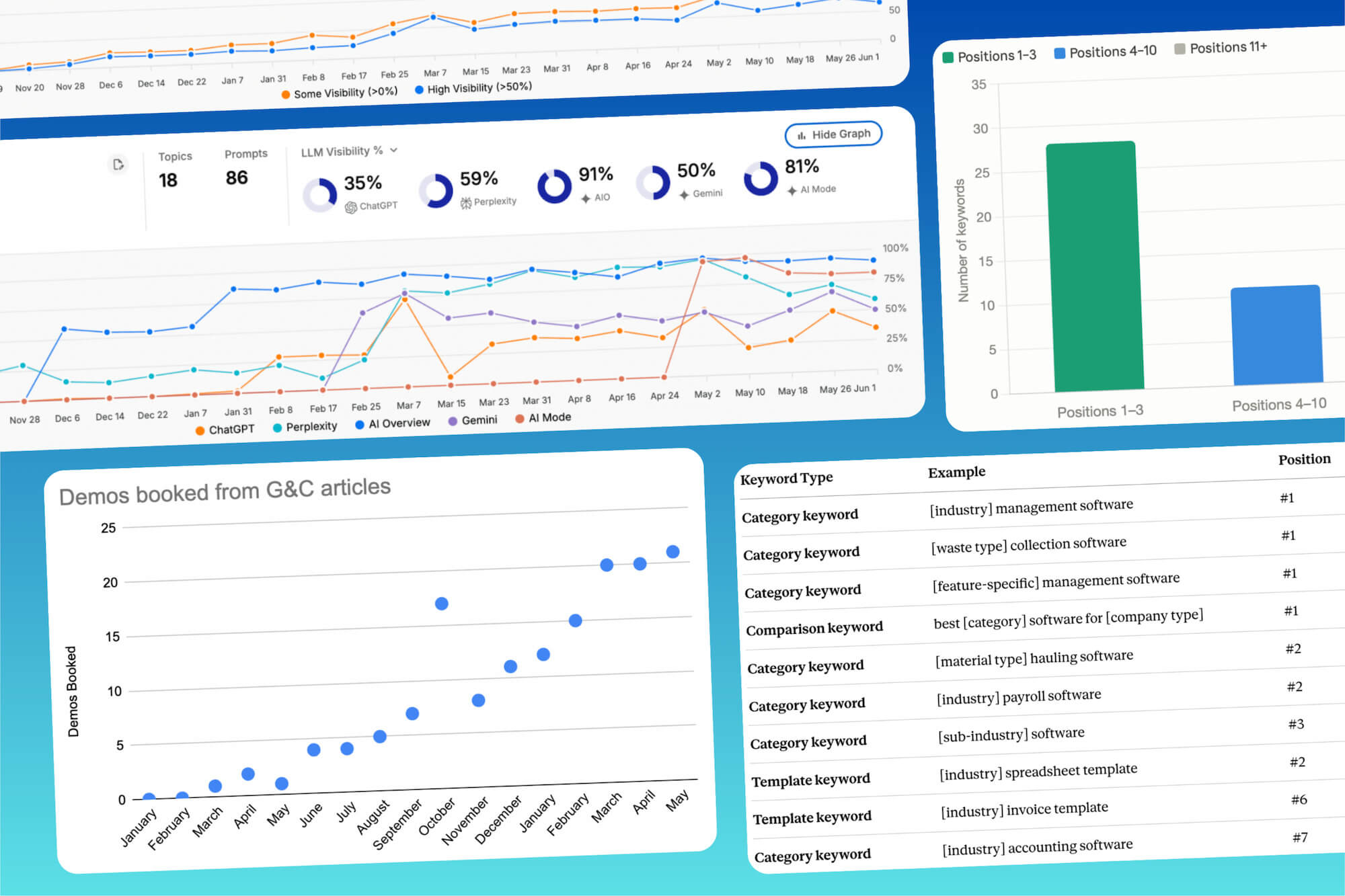
In January and February 2025, Toro booked zero inbound demos. By June, they were at 4 per month. By October, they hit 17. After a natural dip in November, the numbers climbed back to 15 in March 2026 and have been consistently in double digits since.
Over the trailing 12 months, Toro is averaging roughly 10 inbound demos per month from content. For a niche B2B software company selling to bulk haulers, that’s a significant pipeline. Every one of those demos is someone who found Toro through a blog post, read about the product, and decided to book a call. The sales team didn’t have to prospect them.
The result: inbound went from 5% of revenue to over 25%.
In even more detail on results that matter to their business, from Q1 ‘25 to Q1 ‘26:
- Opportunity volume is up 350%
- Booked revenue is up 362%
The Results: AI Visibility
As we’ve written about before, this product-centric content strategy improves AI visibility. The same content that ranks on Google also gets Toro recommended by AI search tools. We track this through Traqer, our AI visibility tool.
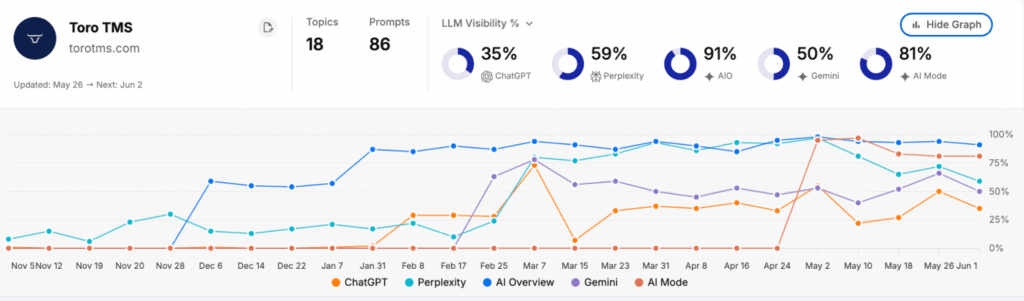
Across 18 topics and 90 prompts, Toro TMS has:
- 91% visibility on Google AI Overviews — when someone asks Google’s AI about trucking software, Toro appears in 91% of relevant responses
- 81% visibility on AI Mode — Google’s newest AI search feature
- 59% visibility on Perplexity
- 50% visibility on Gemini
- 35% visibility on ChatGPT — lower here, but growing
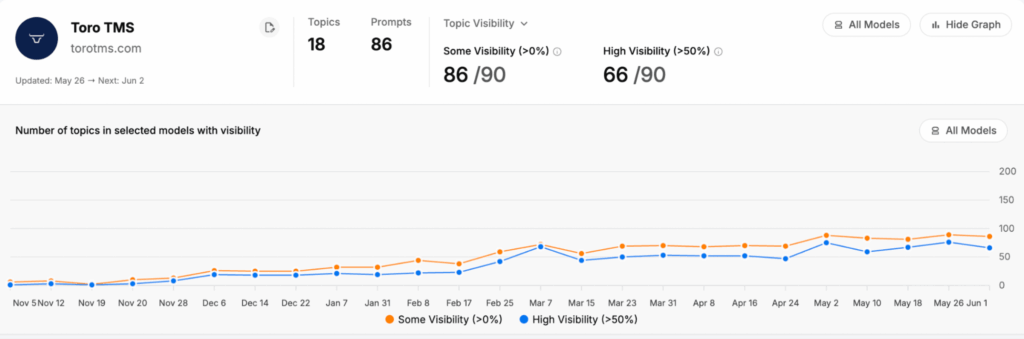
Of 90 tracked topics, Toro has some visibility in 86 of them and high visibility (appearing in more than 50% of prompts) in 65. That’s not a handful of lucky mentions. That’s broad, consistent AI coverage.
This matters because Toro’s customers are exactly the kind of people who are starting to use AI search to find software. A trucking company owner asking ChatGPT “what’s the best TMS for a dump truck fleet” is going to get Toro in the answer because we’ve published content that gives the LLM the details it needs to make that recommendation.
The content that ranks on Google is the same content that gets cited by LLMs. If you write detailed, specific content about your product and your market, AI search picks it up. That’s the thesis behind our topic-based GEO approach, and Toro is a clean example of it working.
Building an SEO and AI Inbound Channel via Content
Toro’s situation is extremely common among our clients. A head of sales, a VP of marketing who just got hired, a founder who knows they need inbound but doesn’t have the team to build it.
The playbook is straightforward:
- Identify the buying-intent keywords in your space. For Toro, that’s every variation of “trucking software” plus adjacent searches around payroll, dispatch, invoicing, and compliance.
- Write content that goes deep on your product’s strengths. Not generic overviews. Detailed, interview-driven content that explains exactly what your product does and who it’s for.
- Be patient. Toro’s first two months were zero demos. That’s normal. SEO takes time. But once the rankings hit, the pipeline compounds month over month.
- Create content that works across AI and SEO. We target high intent keywords on the SEO side, but make the content specific and detailed enough that LLMs will find it and recommend that brand to specific use cases like we talk about in our Invisible Prompts post.
Join the Grow and Convert Newsletter
Get our marketing ideas emailed weekly.
Explore Articles By Categories


Explore our Videos